Looking into Nerve Calm and trying to figure out whether it actually seems serious enough to keep reading about?
That caution is understandable. When a supplement is positioned around nerve comfort, most careful readers are not looking for a dramatic pitch. They want to know whether the formula looks identifiable, whether the product positioning makes sense, whether there are obvious trust issues, and whether the page feels more grounded than the claims surrounding it.
- Positioned as a daily nerve-support formula rather than a general wellness blend.
- The official product identity centers on a five-herb formula and a routine use approach.
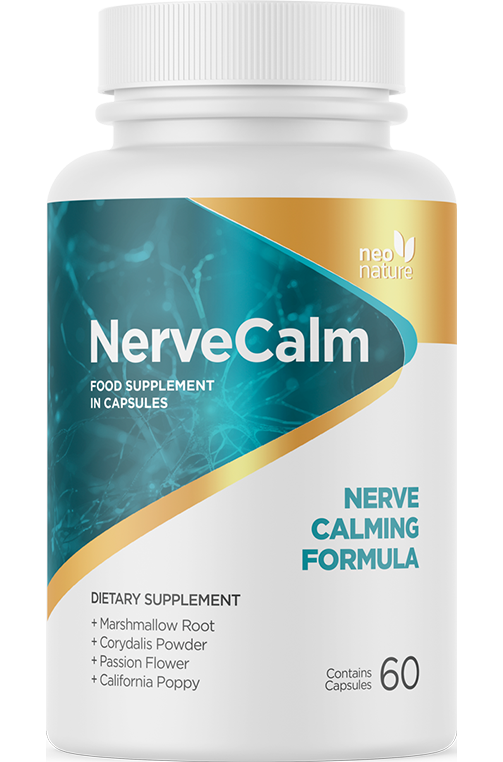
- The bottle presentation looks cleaner and more coherent than some of the stronger marketing claims around it.
- The best next step is usually understanding the formula and the caution points before assuming anything.
Specific positioning
Nerve Calm is framed around nerve comfort and neuropathy-style support rather than a vague all-purpose wellness angle.
Identifiable label
The official page gives the product a recognizable five-herb identity, which helps it feel more concrete than generic supplement funnels.
Normal skepticism
The usual hesitation here is about legitimacy, overstatement, side effects and whether the formula is more believable than the surrounding marketing.
Read with care
The clearest way to judge it is by separating the formula and structure from the strongest pain-relief promises around it.
The most balanced way to read Nerve Calm.
Nerve Calm looks more like a real commercial supplement than a completely random offer. Some earlier packaging also appears under the name CalmPRO5, which helps explain why certain older references may not match the current product name exactly. The bottle, naming and official label direction are at least consistent with one another, and the formula is specific enough to give the product a clearer identity than many generic nerve-health pages.
The caution point is not the bottle itself. It is the surrounding messaging. Some public review-style pages describe what appears to be a different product profile entirely, while the official page leans into stronger neuropathy and pain language than a cautious reader may want to trust at face value.
The most sensible conclusion is that the official formula may be worth evaluating as a nerve-support supplement, especially for adults already comparing products in this category, but it should be judged by its composition and consistency rather than by the most aggressive claims attached to it.
What Nerve Calm is trying to help with.
The official presentation frames it as a daily supplement for nerve comfort, neuropathy-related sensitivity and routine support for people dealing with nerve-related discomfort that affects daily life.
A product for a specific type of searcher.
Nerve Calm is much more likely to attract adults already searching for nerve discomfort support than casual supplement shoppers. That matters because the buyer mindset here is usually more skeptical, more problem-aware and more sensitive to signs of exaggeration.
Built around routine, not novelty.
Even the official offer presents it as a consistent daily-use product rather than a fast-sensation supplement. That changes how a careful reader should interpret the formula from the start.
Why the formula can look coherent without assuming more than the label supports.
The strongest question is not whether the sales language sounds persuasive. It is whether the product logic itself feels organized enough to justify more attention.
It follows a recognizable herbal-support pattern.
The official ingredient list combines herbs that are positioned around comfort, soothing support, calm and tissue-level balance. That at least creates a formula story with internal consistency.
It is broader than a one-ingredient pitch.
That gives the product a more complete feel than single-compound offers. It is trying to sound like a support blend, not just a one-note formula with one flashy ingredient doing all the work.
The weak point is proof, not packaging.
The label may be coherent, but that is not the same as strong evidence for the finished product. A careful reader should separate ingredient rationale from product-level proof.
Expectation still matters.
A routine supplement like this makes more sense when read as ongoing support rather than an immediate, dramatic answer. People with extreme expectations are more likely to read disappointment into normal limitations.
What the formula appears to be trying to support.
The most responsible way to read the benefits is as support-oriented aims suggested by the formula, not guarantees.
Daily nerve comfort support.
The official positioning clearly targets people who want more manageable day-to-day nerve sensitivity rather than a broad vitality product.
A calmer overall feel.
Because the formula includes herbs traditionally associated with soothing and calming support, it may appeal to people who see physical sensitivity and nervous-system strain as connected.
Routine use over abrupt intensity.
The product is presented more like something to use steadily than something built around an intense immediate effect. For some buyers, that alone makes it easier to consider seriously.
A formula identity that feels narrower and more focused.
Compared with broader wellness blends, Nerve Calm feels more targeted. That can be a plus for people who want a product that at least appears purpose-built for one category of concern.
Why people search whether Nerve Calm is legit in the first place.
That question is normal here. Nerve-support supplements often sit in a space where the formula may look reasonable while the copy around it becomes too strong.
There are a few reasons the official product can look more legitimate than a throwaway offer. The bottle design is consistent, the ingredient list is specific, the routine is clearly stated, and the page presents a standard guarantee rather than an obviously confusing checkout structure.
There are also reasons for caution. Public review-style pages use a different product story in some places, and the official page leans on bold neuropathy and relief claims that are stronger than the underlying certainty most careful readers would want. That mismatch is exactly the kind of thing that makes people search for scams, reviews and complaints before trusting a supplement funnel.
The fairest answer is that Nerve Calm appears to be a real product with a concrete formula, but it benefits from slower evaluation. It looks more credible when judged by the label and consistency than when judged by its strongest sales claims.
What the main ingredients appear to be doing.
This is where the product becomes easier to evaluate. The label tells a more useful story than the loudest promises around it.
Corydalis Yanhusuo
Corydalis is one of the ingredients that gives the formula its strongest comfort-support identity. It helps explain why the product is positioned around nerve sensitivity rather than general calm alone.
Opuntia Phaeacantha
Opuntia adds an antioxidant-support angle to the blend. In practical terms, it helps the formula feel broader and less one-dimensional than a product relying only on calming herbs.
Marshmallow Root
Marshmallow Root is often associated with soothing support. Here it adds a gentler, tissue-oriented logic to the formula and helps the product feel more comfort-centered than stimulating.
California Poppy Seed
California Poppy gives the formula a more calming character. That can help explain why some people may see it as more suitable for steadier support rather than for high-energy daytime performance.
Althaea Officinalis
This ingredient contributes to the formula’s herbal comfort identity. It helps keep the overall product story aligned around soothing, support and daily use rather than intensity.
How the formula works as a whole
Taken together, the label reads like a support blend aimed at comfort, calm and ongoing daily use. That does not prove dramatic outcomes, but it does make the formula more coherent than many vague nerve-health pages.
What a careful reader should think about before using something like this.
This is one of the biggest questions around any supplement, and it deserves something more useful than a generic reassurance line.
The realistic safety conversation.
There does not appear to be a broad, well-established public pattern of large-scale complaints specifically about Nerve Calm. What stands out more is limited public review volume and a buyer mindset that is naturally cautious because the category is sensitive and the claims can sound larger than the evidence behind them.
With a multi-herb formula like this, the more realistic concerns are individual tolerance, possible interactions, digestive sensitivity and whether the calming side of the blend fits the person’s day. Those are more useful questions than internet-style alarmism.
The responsible takeaway is simple: “natural” does not automatically mean suitable for everyone, especially when someone already uses medication, has underlying medical issues or expects a supplement to behave like a prescription-level solution.
Who may want to be more careful.
- Anyone taking prescription medication or stacking several supplements at the same time.
- People with ongoing neurological symptoms who should not rely on supplement claims alone.
- Those sensitive to calming herbs or who prefer to avoid anything that may feel too relaxing.
- Pregnant, nursing or underage users, since the product is presented for adults.
- Anyone with a history of digestive sensitivity to concentrated herbal blends.

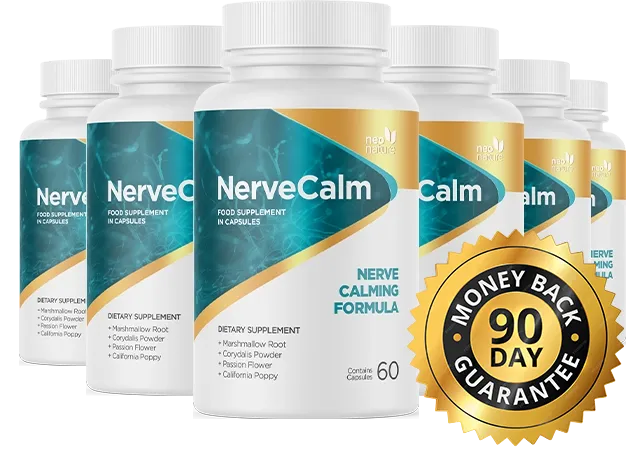
The official page currently shows a 90-day money-back guarantee. That may reduce purchase risk from a commercial point of view, but it should not be treated as proof that the formula is automatically right for every person.
The kind of reactions cautious shoppers usually care about.
These impressions are framed around formula clarity, seriousness and trust, not dramatic before-and-after storytelling.
Linda M.
Tucson, Arizona
I kept reading because the formula looked more specific than a lot of nerve-health products I had seen. What mattered to me most was whether it felt organized, and this one at least had a clear identity.
Richard S.
Akron, Ohio
The sales language was stronger than I like, but the ingredient list itself looked more grounded than the headlines. That made me treat it as something to research more carefully instead of dismissing it right away.
Carla J.
Birmingham, Alabama
I liked that it did not seem built around one trendy ingredient. The formula felt more balanced, especially for someone who prefers a botanical approach over a generic wellness bottle.
David R.
Reno, Nevada
I was mainly looking for something that seemed plausible enough to understand first. My impression was that the bottle looked more credible than some of the copy around it, which actually made me slow down and read the details.
What people usually want to verify before trusting Nerve Calm.
Even when the search includes “complaints,” the real concern is often whether the product is overstated, inconsistent or simply not a good match.
Review pages vs. official page
A major hesitation point here is that not all public review content matches the official product story. That kind of mismatch makes careful buyers slow down and verify which version of the product they are actually reading about.
Expectation vs. support
Another common issue is expecting a supplement to behave like an immediate solution. When the reality is closer to routine support, disappointment can sound like a complaint even when it is really an expectation problem.
Fit and timing
Because the formula includes more soothing herbs, some people naturally want to know whether it fits daytime use, whether it feels too calming and how well it matches their normal routine.
Where Nerve Calm seems to sit among similar products.
It helps to think in categories instead of hard-sell rankings.
More targeted
Compared with broad immune or vitality formulas, Nerve Calm looks more specifically aimed at nerve-related discomfort and daily support, which may appeal to people who want a narrower focus.
More botanical
Compared with vitamin-led nerve supplements, it appears more rooted in traditional herbs and calming support rather than simple nutrient replacement.
Less clean in messaging
Compared with brands that keep their claims more restrained, the surrounding sales language here feels more aggressive. That does not erase the formula, but it does make trust slower to build.
The questions most people want answered before deciding what to do next.
These are usually the questions that matter more than polished marketing language.
What is Nerve Calm designed to support?
Does Nerve Calm really make sense based on the formula?
Is Nerve Calm legit or just overhyped?
Are there any side effects to think about?
Why are people searching for complaints?
How should it usually be taken?
How long do people usually give a product like this before judging it?
Who may want to be more careful before using it?
Why do many people prefer checking the official details carefully?
If you are still undecided, that is probably a good sign.
It usually means you are trying to separate a real formula from a loud supplement pitch, which is exactly the right instinct in this category.
Nerve Calm looks easier to take seriously when you focus on the ingredient list, the product structure and the daily-use logic rather than on the strongest relief language built around it. The official formula does have a recognizable identity, and that gives it more shape than many generic nerve-health products.
The part to stay grounded on is certainty. A coherent label is not the same as proof of dramatic outcomes, and a stronger-than-necessary funnel can make any product look more convincing than it really is. That is why the calmer, label-first read matters so much here.
If that slower and more practical way of evaluating supplements matters to you, then Nerve Calm may be worth understanding further as a formula — not as a promise.
A more useful next step
Review the formula details, the safety questions and the source consistency one more time. That usually tells you more than the loudest headlines do.
Back to the top